

Knowledge
Discover everything you need to know about ingrown toenails and the various treatment options for this condition.

Ingrown nail
Unguis Incarnatus
Fingernails and toenails serve as protective coating and as tools. They are made of 100 to 150 irregular layers of horn cells and are generally between 0.5 and 0.7 mm strong. They are attached to the nail bed.
while toenails grow approx. 1 mm per month, fingernails generally grow by the same amount in just one week. Nail growth is due to the hornification process behind the nail bed which is slowly pushing forward horned keratin.
What is an
ingrown nail?
»Unguis incarnatus« or »Onychocryptosis« are the medical terms for ingrown nails where the rim of the nail is pushed into the nail fold and thus causing discomfort.
There are numerous types of ingrown nails: normal nails that have been cut incorrectly, involuted nails and pincer nails. Unguis incarnatus often affects the large toenails of men and women. But infants and children also frequently suffer from this painful nail deformation.
Causes for ingrown nails
Ingrown nails are often caused by unsuitable shoes or incorrect nail care. If the nail edges are rounded or cut inappropriately, parts of the nail (spurs) may remain which subsequently grow into the nail bed or the nail fold. This causes skin irritation and subsequent inflammation. Since the skin is injured, granulation tissue (so-called »excess granulation«) is formed, consisting of skin cells which are produced to close the wound and then grow over the nail, causing the nail to protrude even deeper into the nail fold.
Nail growth disorders, foot malformations or genetic propensity can also cause painful ingrown nails.
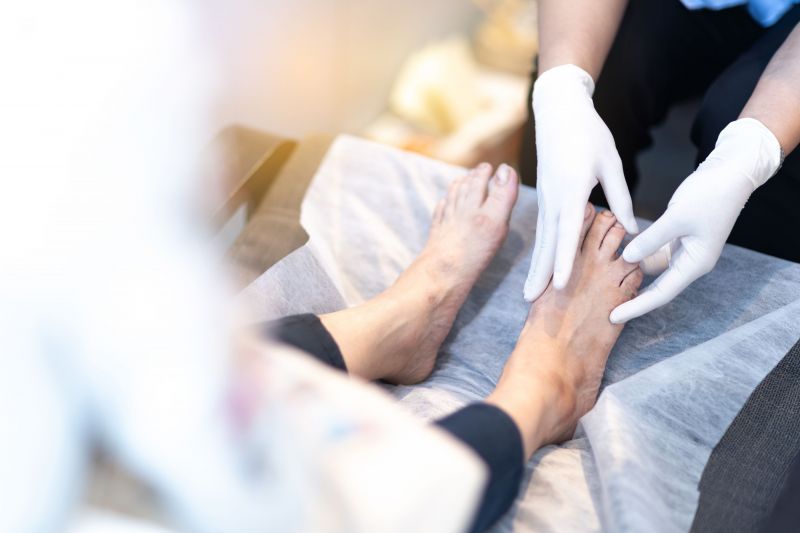
Clinical Survey
The benefits of corrective nail braces were investigated within the scope of a doctoral thesis at the University of Erlangen which analyzed the effect of three-segment wire braces (3TO braces).
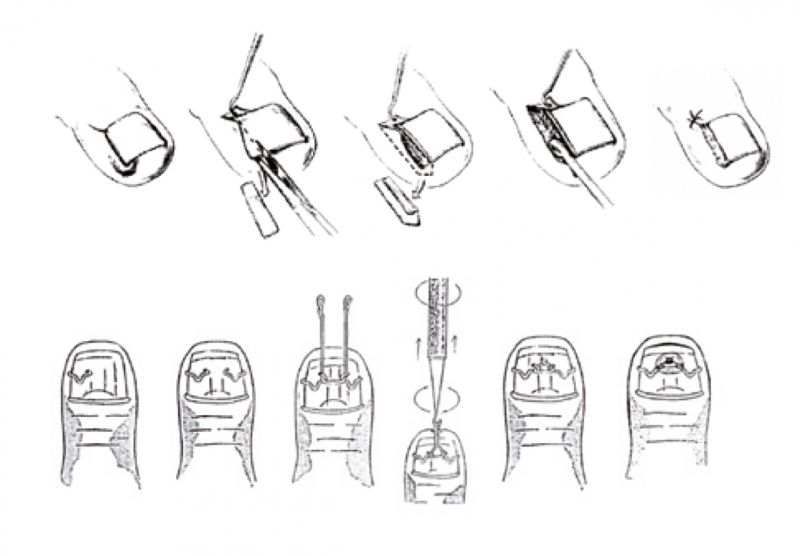
In his thesis, Dr. Harrer compared the effects of the three-segment wire brace with the Emmert operation on two groups of patients with severe ingrown and inflamed nails.
The survey examined pain characteristics, the effect of the treatment on sickness figures and costs in detail.
»Lifting the nail using 3TO nail correction braces usually provides immediate relief from painful nail problems. However, brace techniques can be used not only in acute cases, but also for (prophylactic) pre- and post-treatment care.«

Johannes Sutor – CEO
Results
All patients using the brace stated that they experienced the brace as »not disturbing at all«, which indicates a high degree of patient comfort. Treatment with corrective nail braces was significantly less painful than the surgical intervention.
Conclusion
The results of the survey suggest that corrective nail braces provide a painless and conservative method with a low relapse rate for treating unguis incarnatus. The everyday life of patients is much less affected and time off work is reduced. This form of therapy should therefore be used for patients with unguis incarnatus wherever possible.
»For almost 30 years, I have been successfully using 3TO braces in our practice, even in very difficult cases!«

»As a long-time user, I rely on 3TO wire and adhesive braces in my practice - an effective, gentle alternative to surgery that helps many patients achieve pain-free nails.«

»During my training, I learned to appreciate 3TO braces. They have been the standard in my practice ever since because they perfectly meet all needs.«


Treatment
Options
More than 2.5 % of the population suffer from ingrown toenails, due to wrong nail trimming or tight shoes. Fingernails can also be affected. Patients concerned either consult their GP or seek help from podiatrist or chiropodists. The unguis incarnatus is often treated with the Emmert operation, a common surgical intervention aimed at destroying the nail matrix. This operation is very painful and has significant consequences for the everyday life of the patient.
The relapse rate is high. Corrective nail braces are a proven alternative. They relieve pain quickly and enable lasting therapy success. The patient wears the nail braces, which are regularly replaced or adjusted, attached to the nail for a period lasting a couple of weeks up to several months.
Corrective nail braces are attached to the nail or fastened below the nail rim and activated by medically trained staff or foot care professionals. The brace slightly lifts the nail rim, alleviating pressure on the surrounding tissue. Different devices can be used, depending on the individual case and medical requirements. 3TO is specialized in corrective nail braces and supplies five different corrective nail devices which perfectly supplement each other.
FAQ
A one-day seminar is mandatory for the three-part 3TO brace. The other braces (PREMIOFORM, PODOSTRIPE, podofix, and COMBIped) are much less complicated to use and therefore do not require any training.
In principle, wire braces are more effective than adhesive braces. However, adhesive braces have other advantages. For example, there is no risk of injury and they are much easier to use.
We recommend having at least one wire and one adhesive brace in your range so that you can react flexibly to your patients' complaints.